
Overview
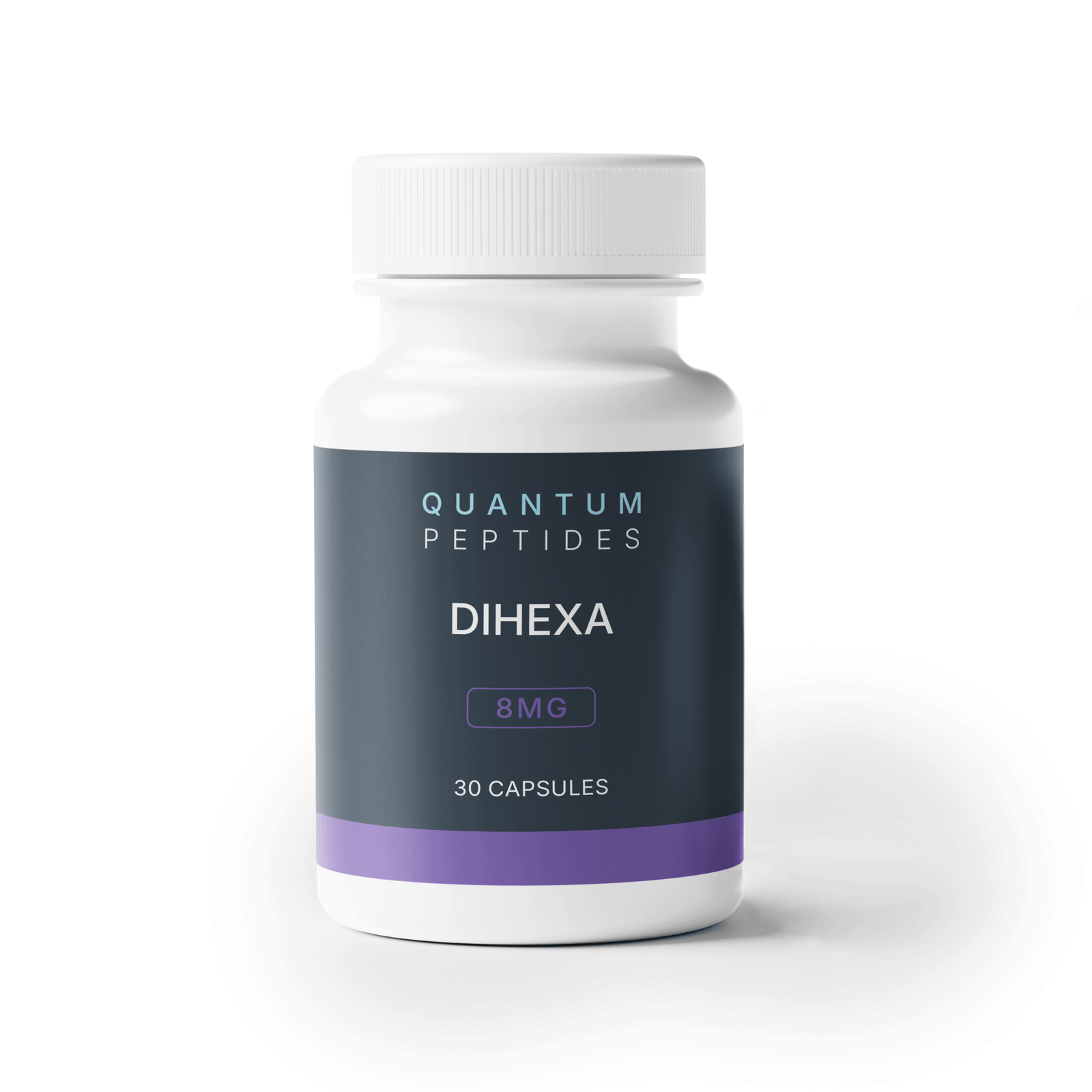
Dihexa (N-hexanoic-Tyr-Ile-(6)-aminohexanoic amide) is a small, orally stable peptidomimetic developed at Washington State University as a metabolically stabilised derivative of the angiotensin IV fragment. It is characterised in the literature as a modulator of hepatocyte growth factor (HGF)/c-Met signalling. Supplied in capsule form for preclinical research.
Research background
The primary literature is the 2013 Journal of Pharmacology and Experimental Therapeutics work from the Harding and Wright laboratories (McCoy et al.), which described Dihexa’s blood–brain-barrier penetration and HGF/c-Met-dependent effects in rodent memory models, with later in-vitro work on synaptogenesis endpoints. Research remains preclinical; there is no human clinical programme. Because it is a small molecule rather than a classical peptide, it is stable at room temperature and in oral formulations.
Specifications
| Chemical name | N-hexanoic-Tyr-Ile-(6)-aminohexanoic amide |
| Molecular formula | C27H44N4O4 |
| Molecular weight | ≈ 504.7 g/mol |
| Purity (HPLC) | ≥ 99% — see lot certificate |
| Form | Capsules, 8 mg each |
| Storage | Room temperature, dry, protected from light |
Certificate of analysis
Every lot is tested by an independent US laboratory. The certificate for the lot you receive is linked in the product details above and carries the same lot number as the vial label. New to reading one? How to read a peptide certificate of analysis.
Handling and storage
Store dry at room temperature, protected from light, in the original container.
Frequently asked questions
Why is Dihexa supplied as capsules rather than a vial?
It is an orally stable small molecule, not a lyophilised peptide, so a capsule format is appropriate for preclinical oral-administration research models.
Does it need refrigeration?
No. Store dry at room temperature, away from light.
Is there a certificate for this lot?
Yes — linked on this page, lot-matched to the label.
What does the research literature cover?
Primarily rodent and in-vitro work on HGF/c-Met signalling from Washington State University. There are no human trials.
Human or veterinary use?
No. Research use only.
Research use only. All products are supplied for in-vitro and preclinical laboratory research only. Not for human or veterinary use, not for diagnostic or therapeutic use. Purchaser must be 21+ and accept the Research Use Acknowledgement.