
Overview
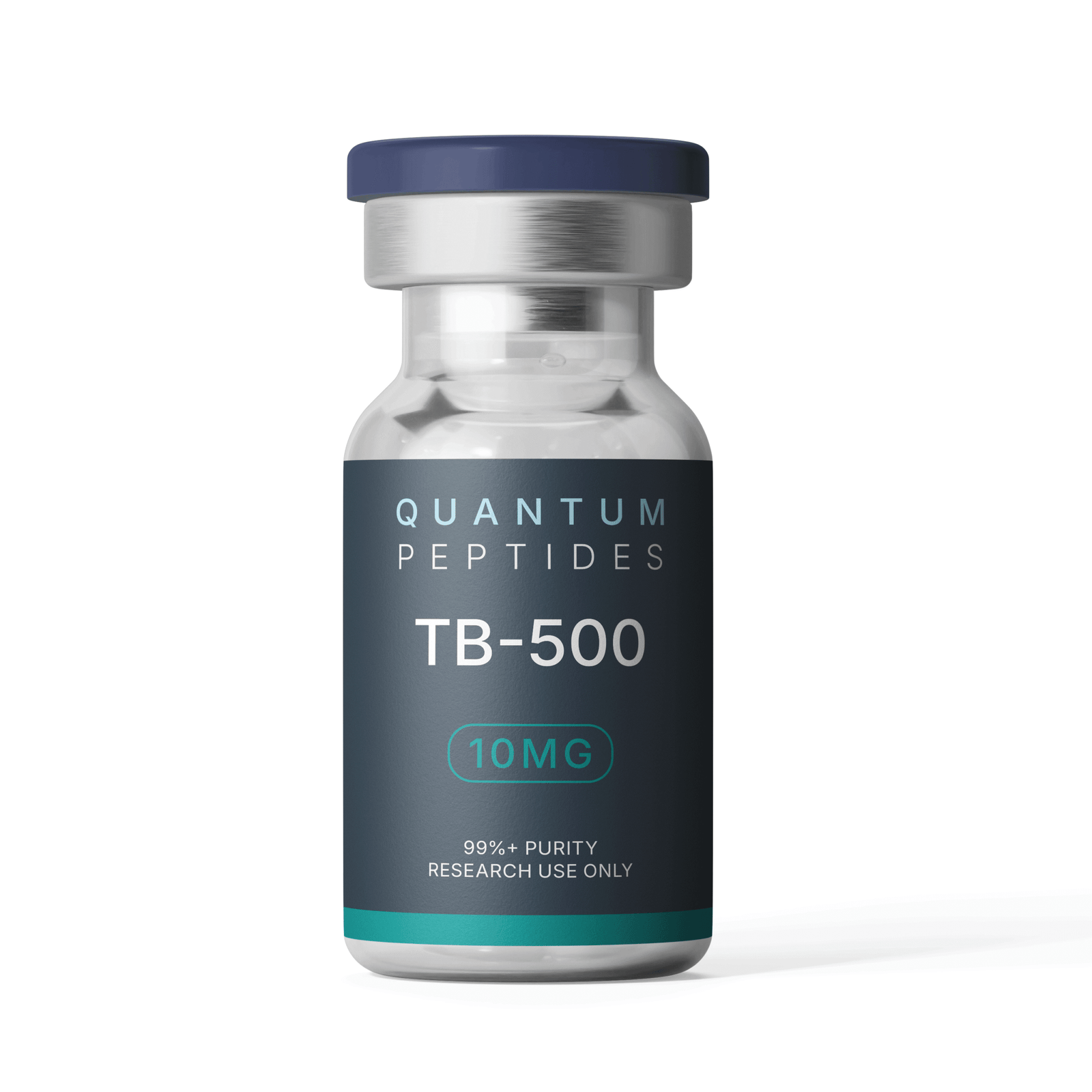
TB-500 is the research-catalogue name for synthetic thymosin β4 (Tβ4), a 43-amino-acid, N-terminally acetylated peptide that is one of the most abundant small proteins in mammalian cells and the principal intracellular buffer of unpolymerised actin. This product is the full-length 43-residue peptide (sequence Ac-SDKPDMAEIEKFDKSKLKKTETQEKNPLPSKETIEQEKQAGES), not the seven-residue “17–23” fragment that some suppliers also sell under the TB-500 name. It is supplied here as a lyophilised powder for in-vitro and preclinical laboratory use.
Research background
Thymosin β4 was isolated in 1981 by Allan Goldstein’s group from thymosin fraction 5, a bovine thymus extract, and was later found in almost every cell type, especially platelets and leukocytes. Its defining biochemistry was settled in the early 1990s: Tβ4 binds monomeric G-actin in a 1:1 complex and holds it out of polymerisation, which makes the bulk of the cell-biology literature a story about cytoskeletal dynamics and cell migration. From the late 1990s, animal studies examined topical and systemic Tβ4 in dermal wound, corneal injury and cardiac injury models, reporting changes in closure rate, re-epithelialisation, angiogenesis markers and inflammatory-cell infiltration. Unusually for a research peptide, full-length Tβ4 has also been studied in sponsored human clinical trials, mainly as topical and ophthalmic pharmaceutical formulations; those trials concern regulated products under clinical supervision and have no bearing on a research reagent. Its N-terminal tetrapeptide, Ac-SDKP, is released by cleavage and has its own literature as a regulator of haematopoietic stem-cell proliferation and fibrosis in animal models.
Two cautions apply. The first is naming: “TB-500” is used by different vendors for two different molecules, and only the certificate’s observed mass tells you which one is in the vial (≈4,963 for the full peptide, ≈889 for the fragment). The second is evidence: the animal literature is heterogeneous in formulation, concentration and route, and the clinical data concern specific pharmaceutical products, not research-grade peptide. Our guide to TB-500 and thymosin β4 covers both points in detail.
Specifications
| Sequence | Ac-Ser-Asp-Lys-Pro-Asp-Met-Ala-Glu-Ile-Glu-Lys-Phe-Asp-Lys-Ser-Lys-Leu-Lys-Lys-Thr-Glu-Thr-Gln-Glu-Lys-Asn-Pro-Leu-Pro-Ser-Lys-Glu-Thr-Ile-Glu-Gln-Glu-Lys-Gln-Ala-Gly-Glu-Ser (43 residues, N-acetylated) |
| Also known as | Thymosin β4, Tβ4, thymosin beta-4, TMSB4X (gene), TB-500 |
| CAS number | 77591-33-4 |
| Molecular formula | C212H350N56O78S |
| Molecular weight | C₂₁₂H₃₅₀N₅₆O₇₈S · 4,963.4 g/mol |
| Purity (HPLC) | Specification ≥ 99%; batch certificate not yet available (product is backordered) |
| Form | Lyophilised powder, 10 mg |
| Solubility | Water, bacteriostatic water, PBS |
| Storage (lyophilised) | −20 °C, desiccated, protected from light |
Mechanism of action
The established mechanism is actin sequestration: Tβ4 binds G-actin through a short internal motif (residues 17–23, LKKTETQ) and an N-terminal helix, forming a 1:1 complex that cannot add to a filament. By setting the size of the unpolymerised actin pool, it regulates how quickly a cell can remodel its cytoskeleton, which is the basis for its effects on migration in scratch and transwell assays. Beyond this, the literature proposes several less certain roles: extracellular Tβ4 acting on endothelial and epithelial cells, interactions with integrin-linked kinase and with the enzyme ATP synthase at the cell surface, and the separate activity of the cleaved Ac-SDKP tetrapeptide. Of these, actin binding is settled biochemistry; the extracellular signalling roles are hypotheses supported by animal and cell data of varying quality.
Research findings and limitations
Reported findings: altered actin polymerisation kinetics and increased migration of endothelial cells, keratinocytes and fibroblasts in vitro; faster closure, re-epithelialisation and angiogenesis markers in rodent dermal-wound models; protective effects in rodent corneal and cardiac injury models; clinical trials of pharmaceutical Tβ4 formulations in wound and ophthalmic indications. Limitations: heterogeneous animal protocols, clinical data that apply only to the regulated products studied, and no controlled human data for research-grade peptide from any vendor. A research supplier can confirm identity and purity; it cannot characterise effects in people, and this product is not for human or veterinary use.
Certificate of analysis
This product is currently backordered and no batch has been released for sale, so there is no batch-specific certificate of analysis yet. Quantum Peptides does not publish a certificate until an independent US laboratory has tested the exact lot that will ship. When stock is released, the lot number, measured purity and certificate link will appear in the product details above, as they do on our in-stock products. For a 43-residue peptide the certificate’s observed mass (≈4,963) is also what confirms you have the full-length peptide rather than the fragment. New to reading one? How to read a peptide certificate of analysis.
Handling and storage
Store the lyophilised powder at −20 °C, sealed and protected from light, and bring the vial to room temperature before opening. Tβ4 has no cysteine but one methionine (position 6), which can oxidise in solution to the sulfoxide, a known Tβ4 variant; it is also a long chain that degrades in solution over weeks. Keep reconstituted solution at 2–8 °C in the dark, prepare fresh for sensitive assays, and divide into single-use portions rather than freeze–thawing one vial. See how to reconstitute a lyophilised peptide, bacteriostatic water vs sterile water and peptide storage and shelf life.
Reconstituting TB-500
Thymosin β4 dissolves readily in water, bacteriostatic water or PBS. As an example of the arithmetic, 10 mg reconstituted with 2 mL gives 5 mg/mL, which is about 1.0 mM for a 4,963 g/mol peptide. Use the peptide calculator for any other diluent volume or quantity per draw. Long peptides foam if shaken: add diluent slowly down the inside of the vial and swirl.
Related research compounds
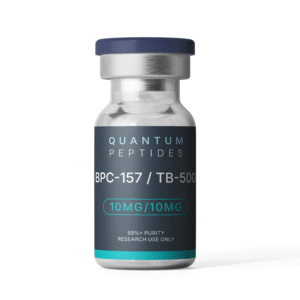
Thymosin β4 is also supplied co-lyophilised with BPC-157 as the BPC-157 / TB-500 blend and in the three-peptide Glow peptide blend; how the two peptides differ, and when a blend is the right format, is covered in BPC-157 vs TB-500 and peptide blends in research. The single compound is the right choice for control arms and ratio studies.
Frequently asked questions
Is a certificate of analysis available for this product?
Not yet. The product is backordered and no batch has been released. A batch-specific certificate from an independent US laboratory will be linked on this page before any stock ships.
Is TB-500 the same as thymosin β4?
Here, yes: this product is the full-length 43-residue synthetic thymosin β4. Some suppliers use the TB-500 name for the seven-residue 17–23 fragment, a different molecule; the certificate’s observed mass distinguishes them.
What is the molecular weight and CAS number of TB-500?
About 4,963.4 g/mol (C₂₁₂H₃₅₀N₅₆O₇₈S); CAS 77591-33-4.
Is TB-500 stable in solution?
Moderately. It has no cysteine, but its single methionine can oxidise and a 43-residue chain degrades over weeks in solution. Store solutions cold and dark and portion them for freezing.
How should the lyophilised powder be stored?
At −20 °C, sealed, desiccated and protected from light. Bring to room temperature before opening.
Why is TB-500 also sold in a blend with BPC-157?
Because the two are often studied together in tissue and migration models; a co-lyophilised vial removes the weighing error of mixing two stocks. The single compound is needed for control arms and when the ratio must vary.
Can this product be used in humans or animals?
No. Quantum Peptides products are supplied for in-vitro and preclinical laboratory research only, not for human or veterinary use.
References
- Low TLK, Hu SK, Goldstein AL. Complete amino acid sequence of bovine thymosin β4. Proceedings of the National Academy of Sciences. 1981.
- Safer D, Elzinga M, Nachmias VT. Thymosin β4 and Fx, an actin-sequestering peptide, are indistinguishable. Journal of Biological Chemistry. 1991.
- Goldstein AL, Hannappel E, Kleinman HK. Thymosin β4: actin-sequestering protein moonlights to repair injured tissues. Trends in Molecular Medicine. 2005.
- Sosne G, Qiu P, Kurpakus-Wheater M. Thymosin beta 4: a novel corneal wound healing and anti-inflammatory agent. Clinical Ophthalmology. 2007.
Research use only. All products are supplied for in-vitro and preclinical laboratory research only. Not for human or veterinary use, not for diagnostic or therapeutic use. Purchaser must be 21+ and accept the Research Use Acknowledgement.