
Overview
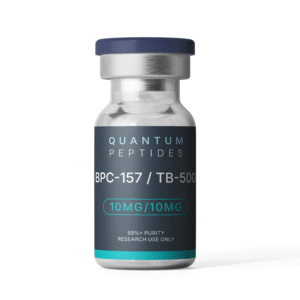
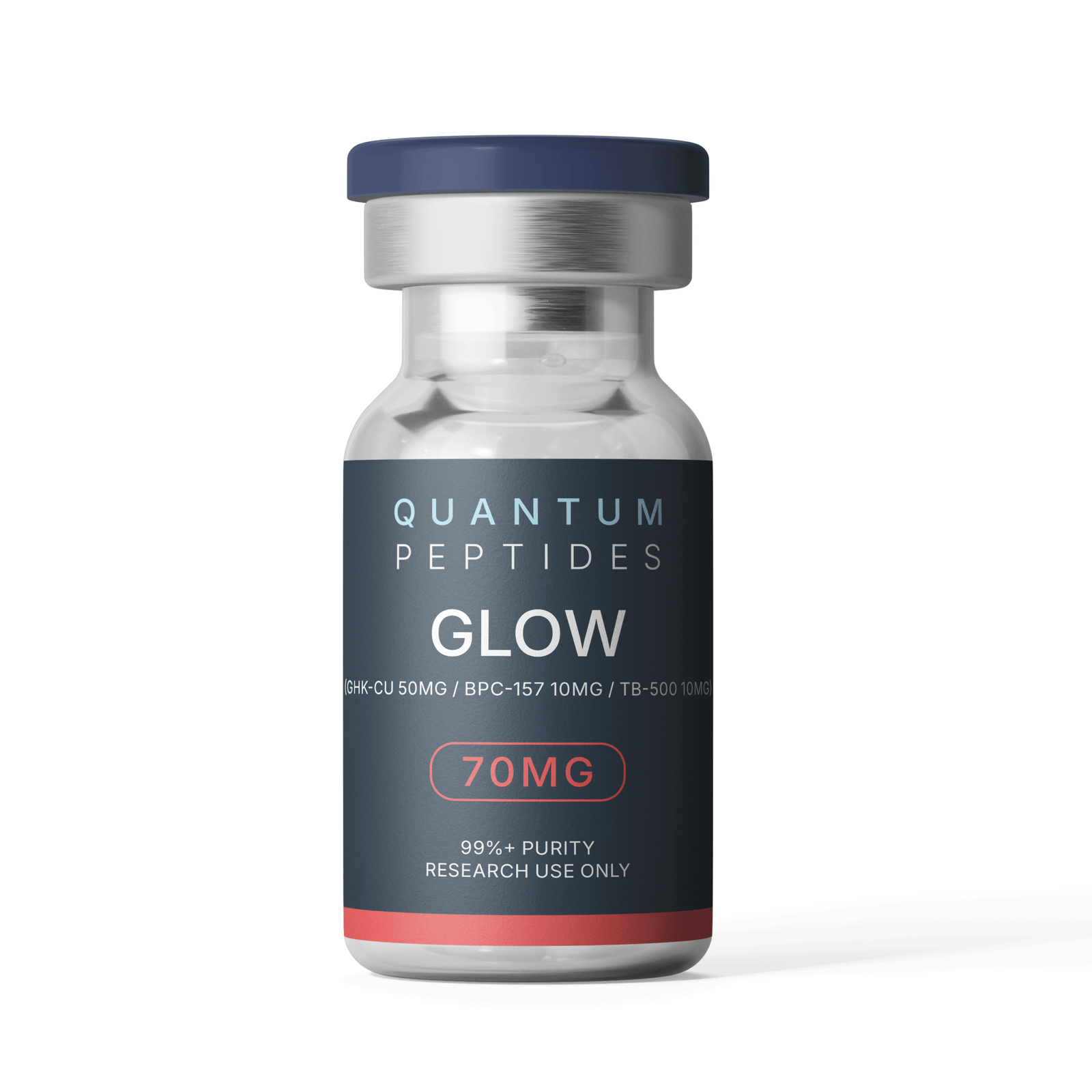
A three-peptide co-lyophilised research blend: 10 mg BPC-157, 10 mg TB-500 (thymosin β4) and 50 mg GHK-Cu (glycyl-L-histidyl-L-lysine copper complex). Supplied as a single vial for laboratories investigating the three compounds in combination in tissue, fibroblast and extracellular-matrix models.
Research background
Each component has its own preclinical literature: BPC-157 in rodent tissue models, thymosin β4 in cell-migration and actin-dynamics studies, and GHK-Cu — first isolated from human plasma by Pickart in 1973 — in fibroblast collagen-synthesis assays, metalloproteinase regulation and gene-expression profiling. The blend exists because these three are commonly studied together in in-vitro skin and connective-tissue models. No clinical programme exists for the combination.
Specifications
| Component 1 | BPC-157, 10 mg (MW 1,419.5 g/mol) |
| Component 2 | TB-500 (thymosin β4), 10 mg (MW ≈ 4,963 g/mol) |
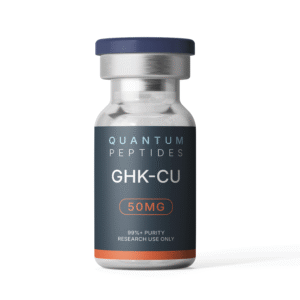
| Component 3 | GHK-Cu, 50 mg (MW ≈ 403.9 g/mol as the copper complex) |
| Purity (HPLC) | ≥ 99% per peptide — see lot certificate |
| Form | Lyophilised powder blend, 70 mg total |
| Appearance | Blue to blue-violet powder (copper complex) |
| Storage (lyophilised) | −20 °C, desiccated, protected from light |
Certificate of analysis
Every lot is tested by an independent US laboratory. The certificate for the lot you receive is linked in the product details above and carries the same lot number as the vial label. New to reading one? How to read a peptide certificate of analysis.
Handling and storage
Store the lyophilised powder at −20 °C, sealed and protected from light, and bring the vial to room temperature before opening. After reconstitution keep the solution at 2–8 °C in the dark. See how to reconstitute a lyophilised peptide (with calculator) and peptide storage and shelf life.
Frequently asked questions
Why is the powder blue?
GHK-Cu is a copper(II) complex and is blue in both solid and solution. The colour is expected and is not a sign of degradation.
Does GHK-Cu affect the stability of the other peptides in solution?
Copper ions can catalyse oxidation of susceptible residues over time. Reconstitute only what will be used within the working period, keep the solution cold and dark, and avoid long storage of the mixed solution.
How is the blend tested?
Identity and purity are reported per component on the lot certificate linked above.
What diluent should be used?
Bacteriostatic water or sterile water, added slowly down the vial wall. See the reconstitution guide.
Research use only?
Yes. In-vitro and preclinical laboratory research only; not for human or veterinary use.
Research use only. All products are supplied for in-vitro and preclinical laboratory research only. Not for human or veterinary use, not for diagnostic or therapeutic use. Purchaser must be 21+ and accept the Research Use Acknowledgement.